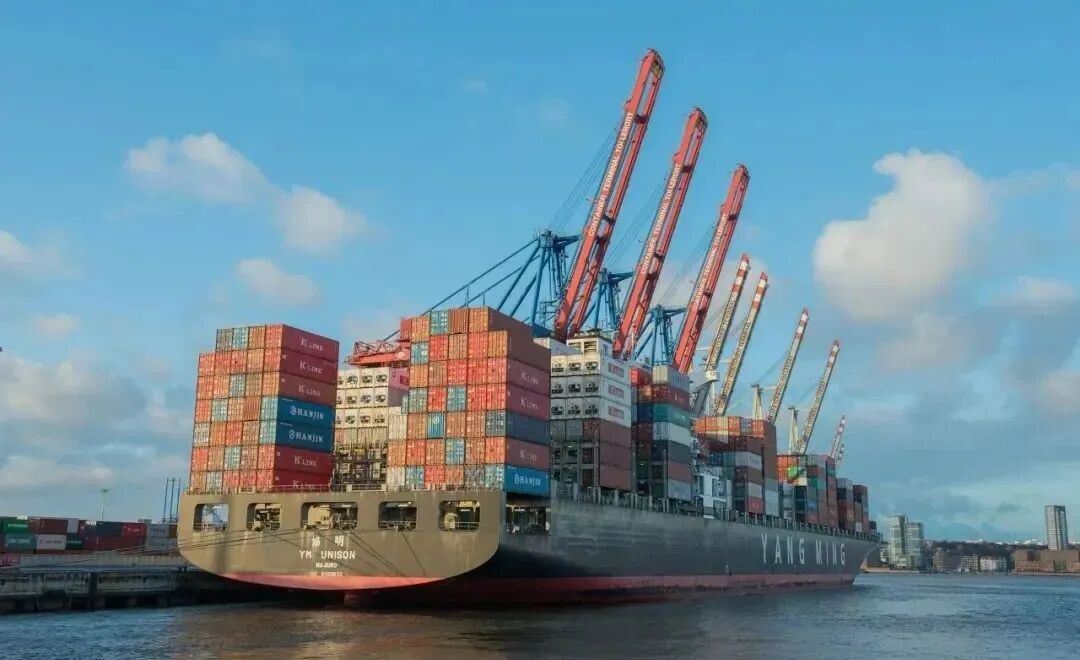
A new agreement has hit the pause button on the persistently tense U.S.-China trade relations, finally delivering the long-awaited certainty that business owners and exporters have been hoping for.
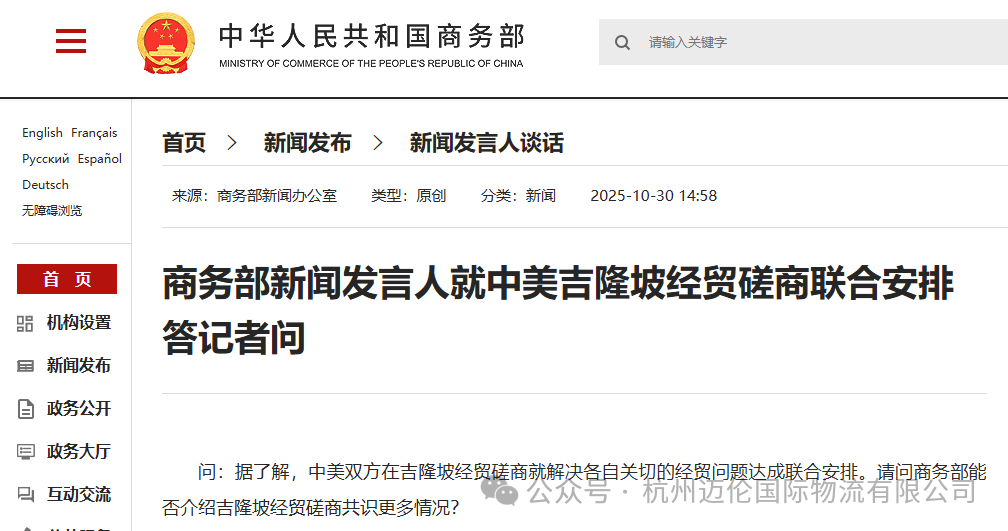
I. Major Announcement: A Dual-Track "Truce" on Tariffs and ControlsOn October 30, Beijing time, following consultations, U.S. and Chinese economic and trade teams officially announced a series of consensus agreements. The core content revolves around two main lines: tariff reductionsand easing of controls, aimed at injecting stability into bilateral trade.Key points of the agreement include:
Reduction of the "Fentanyl Tariff":The U.S. will reduce the so-called "Fentanyl-related" additional tariff on Chinese exports to the U.S. from the current 20% down to 10%, and this applies broadly to almost all Chinese goods exported to the U.S. This adjustment will take effect officially on November 10.
Extension of the "Reciprocal Tariff" Pause:The previously suspended 24% reciprocal tariff will remain suspended for another year, meaning the current baseline reciprocal tariff rate will be maintained at 10%.
The U.S. will suspend its "Section 301" investigation measures targeting China's maritime, logistics, and shipbuilding industries for one year, and China will correspondingly suspend its countermeasures.
The validity periods for multiple "Section 301" tariff exclusion lists (involving 178 HTSUS codes), originally set to expire at the end of 2025, will be uniformly extended until November 10, 2026, providing a longer buffer period for relevant enterprises.
II. Practical Guide: A Complete Breakdown of the New Tariff Calculation LogicWith the policy enacted, the key lies in application. Below is the latest logic for calculating U.S. tariffs on Chinese goods, which import/export enterprises must grasp immediately:General Formula: Final Tariff = Base Rate + Section 301 Tariff + Section 232 Tariff + Fentanyl Tariff + Reciprocal Tariff + AD/CVD DutiesDepending on the product category, the specifics fall into the following five scenarios:
Scenario 1: Most Common GoodsFinal Tariff = Base Rate + 10%+ 10%(i.e., only the reduced Fentanyl Tariff and the paused Reciprocal Tariff are added)
Scenario 2: Goods Subject to "Section 232" TariffsFinal Tariff = Base Rate + 50%+ 10%+ 10%(Applies to steel, aluminum, auto parts, etc. Note: Section 232 tariffs typically apply only to specific components of the product.)
Scenario 3: Goods Subject to "Section 301" TariffsFinal Tariff = Base Rate + 7.5% - 25%+ 10%+ 10%(Applies to goods on previous lists, such as electronics, furniture, etc.)
Scenario 4: Few Goods Subject to BOTH "Section 301 + 232"Final Tariff = Base Rate + 7.5% - 25%+ 50%+ 10%(Few products fall into this category; precise HTS code verification is essential.)
Scenario 5: Small Parcels (e.g., Cross-border E-commerce)Final Tariff = 54%ad valorem duty OR $100 per packageflat rate (whichever is higher)(If the goods are subject to "AD/CVD duties", these are added additionally.)
III. Action List: Seize the Window of Opportunity – Three Urgent TasksFacing this favorable window, companies are advised to act immediately:
Immediately Check In-Transit Shipments:Quickly review all goods that shipped after October 30and have not yet cleared customs. Tariff application is based on the "date of import declaration". Be sure to confirm the customs clearance date with your freight forwarder/customs broker to ensure declaration occurs after the policy takes effect on November 10, thus allowing you to benefit from the new rates.
Re-calculate Costs and Update Pricing:Immediately use the new formula above to comprehensively review your product profit structures. Especially for categories with thin profit margins and high tariff exposure (e.g., home goods, textiles, small appliances), this is a critical window to adjust pricing and enhance competitiveness.
Establish Long-Term Resilience Mechanisms:This suspension is valid for one year, and future policy remains uncertain. Companies should use this opportunity to optimize supply chain布局 (layout), consider diversification strategies, and build financial models that can quickly adapt to tariff changes to enhance risk resilience.
From fierce confrontation to pragmatic dialogue, this round of agreements signals that U.S.-China economic and trade relations are entering a new phase characterized primarily by "managed competition." For compliant enterprises, this is not only a direct cost "relief" but also an opportunity to optimize market strategy and seize the initiative. Those who can most quickly digest the policy and adapt flexibly will gain the upper hand in the next round of competition.
 Tracking shipments